1.0

Weirdings Dance Classes

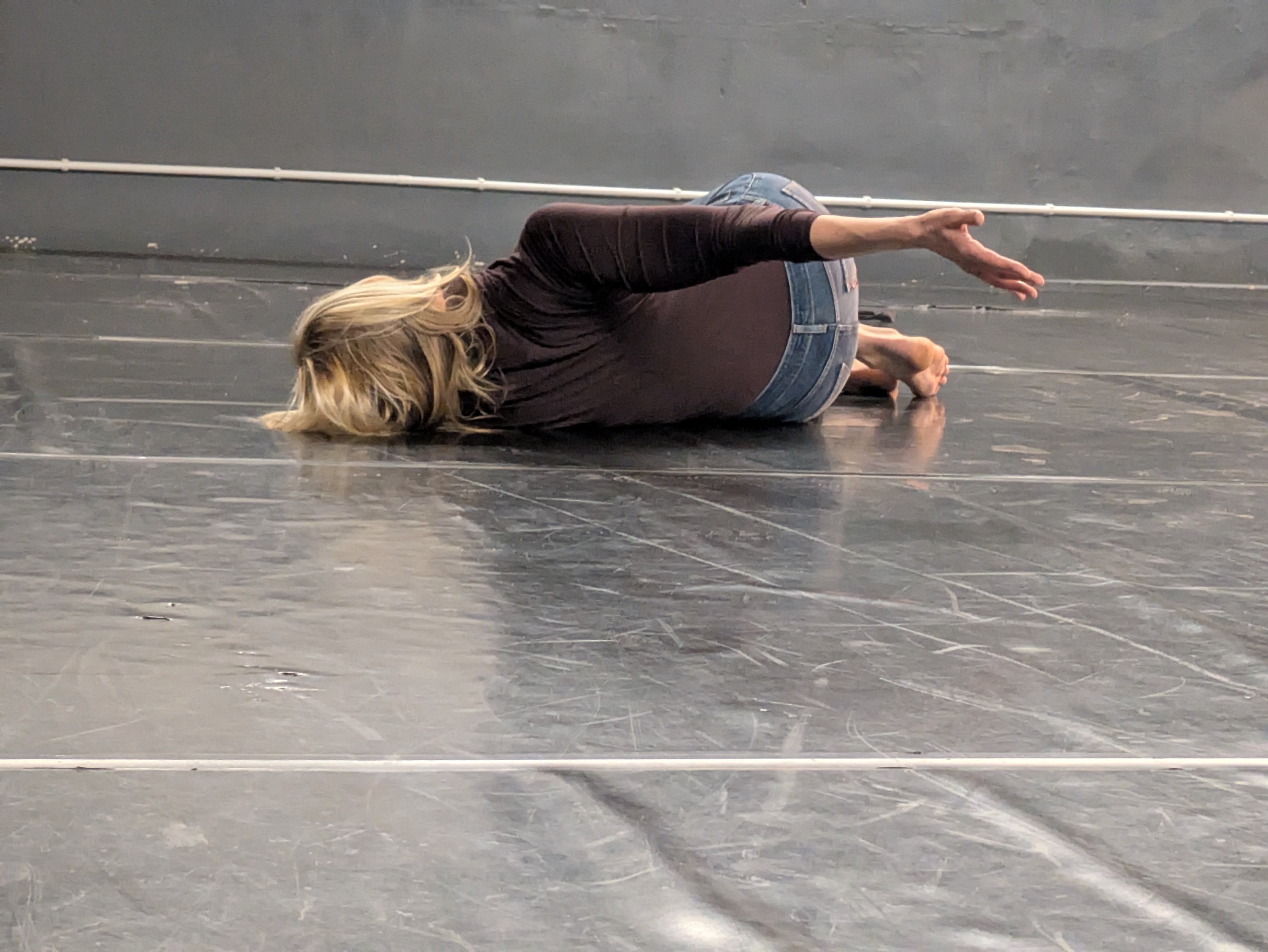
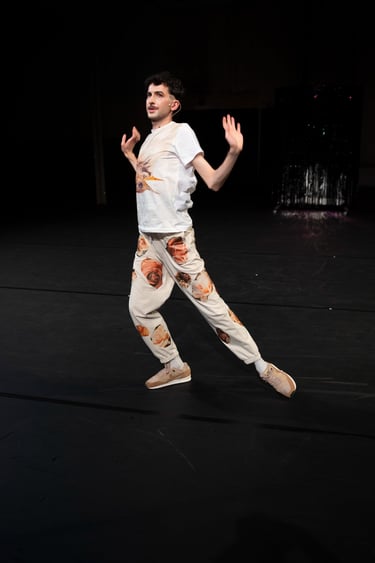
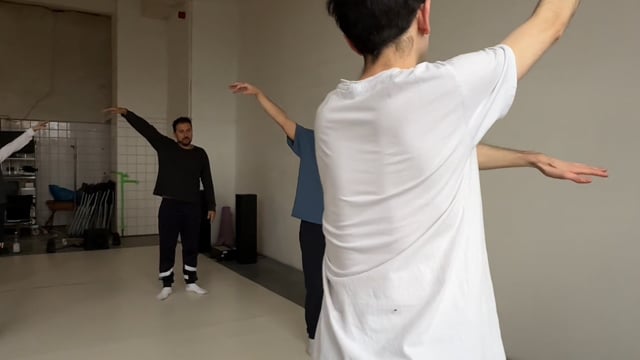
Weirdings is my contemporary dance practice that facilitates movement exploration, accommodating your present capabilities while expanding them through attention. My approach follows a non-linear structure of introduce, explore, return - allowing drop-in participation and self-paced investigation.

I prioritize attendance over intensity, work through repetition with variations, and create space for witnessing each other. Drawing from contemporary dance and somatic practice, we embrace the "weirding" of transformation, investigating joy and rage and the in-between as sites of discovery.

Weirdings takes place at three locations in Berlin:

  • • Flutgraben e. V., Am Flutgraben 3, 12435 Berlin
  • • La Caminada Tanzstudio, Böckhstraße 21, 10967 Berlin
  • • Fincan, Altenbraker Str. 26, 12051 Berlin

Price Overview:

  • • Soli* - free
  • • Reduced* - 10€
  • • Full support - 15€

*no questions asked, just say "Soli" or "Reduced"

Check in via:

Cash
PayPal
Urban Sports Club Wellpass

Open Level: No prior experience needed. All classes are welcome to beginners and experienced dancers alike.

Week 6 Feb 2 – 8
Monday, 2. February 2026
17:15 1h

Technique through Improvisation (Open Level)

Open Level

A contemporary dance class focused on technique, exploring foundational movement principles through structured explorations. We investigate intentionality, bending, locomotion, support and balance. We build vocabulary through repetition, variations and consolidation.

Fincan, Altenbraker Str. 26, 12051 Berlin
11 spots + 2 soli spots
Wednesday, 4. February 2026
18:15 1h

Technique through Improvisation (Open Level)

Open Level

A dance class focused on technique, exploring foundational movement principles through structured explorations. We investigate intentionality, bending, locomotion, support and balance. We build vocabulary through repetition, variations and consolidation.

Flutgraben e. V., Am Flutgraben 3, 12435 Berlin
8 spots + 2 soli spots
Saturday, 7. February 2026
16:30 1h

Movement Improvisation (Open Level)

Open Level

A dance class focused on improvisation, beginning with reflection on creative drivers and inspiration. This class explores movement generation through somatic, spatial and structural scores. We investigate presence, spatial awareness and intentional creation. Each session invites experimentation with quality, texture, interval, intensity and intention.

La Caminada Tanzstudio, Böckhstraße 21, 10967 Berlin
14 spots + 2 soli spots
Week 7 Feb 9 – 15
Monday, 9. February 2026
17:15 1h

Technique through Improvisation (Open Level)

Open Level

A contemporary dance class focused on technique, exploring foundational movement principles through structured explorations. We investigate intentionality, bending, locomotion, support and balance. We build vocabulary through repetition, variations and consolidation.

Fincan, Altenbraker Str. 26, 12051 Berlin
10 spots + 2 soli spots
Wednesday, 11. February 2026
18:15 1h

Technique through Improvisation (Open Level)

Open Level

A dance class focused on technique, exploring foundational movement principles through structured explorations. We investigate intentionality, bending, locomotion, support and balance. We build vocabulary through repetition, variations and consolidation.

Flutgraben e. V., Am Flutgraben 3, 12435 Berlin
9 spots + 2 soli spots
Saturday, 14. February 2026
16:30 1h

Movement Improvisation (Open Level)

Open Level

A dance class focused on improvisation, beginning with reflection on creative drivers and inspiration. This class explores movement generation through somatic, spatial and structural scores. We investigate presence, spatial awareness and intentional creation. Each session invites experimentation with quality, texture, interval, intensity and intention.

La Caminada Tanzstudio, Böckhstraße 21, 10967 Berlin
14 spots + 1 soli spots
Week 8 Feb 16 – 22
Monday, 16. February 2026
17:15 1h

Technique through Improvisation (Open Level)

Open Level

A dance class focused on technique, exploring foundational movement principles through structured explorations. We investigate intentionality, bending, locomotion, support and balance. We build vocabulary through repetition, variations and consolidation.

Fincan, Altenbraker Str. 26, 12051 Berlin
11 spots + 2 soli spots
Wednesday, 18. February 2026
18:15 1h

Technique through Improvisation (Open Level)

Open Level

A dance class focused on technique, exploring foundational movement principles through structured explorations. We investigate intentionality, bending, locomotion, support and balance. We build vocabulary through repetition, variations and consolidation.

Flutgraben e. V., Am Flutgraben 3, 12435 Berlin
10 spots + 2 soli spots
Saturday, 21. February 2026
16:30 1h

Movement Improvisation (Open Level)

Open Level

A contemporary dance class focused on improvisation, beginning with reflection on creative drivers and inspiration. This class explores movement generation through somatic, spatial and structural scores. We investigate presence, spatial awareness and intentional creation. Each session invites experimentation with quality, texture, interval, intensity and intention.

La Caminada Tanzstudio, Böckhstraße 21, 10967 Berlin
14 spots + 2 soli spots
Week 9 Feb 23 – Mar 1
Monday, 23. February 2026
17:15 1h

Technique through Improvisation (Open Level)

Open Level

A dance class focused on technique, exploring foundational movement principles through structured explorations. We investigate intentionality, bending, locomotion, support and balance. We build vocabulary through repetition, variations and consolidation.

Fincan, Altenbraker Str. 26, 12051 Berlin
7 spots + 2 soli spots
Wednesday, 25. February 2026
18:15 1h

Technique through Improvisation (Open Level)

Open Level

A dance class focused on technique, exploring foundational movement principles through structured explorations. We investigate intentionality, bending, locomotion, support and balance. We build vocabulary through repetition, variations and consolidation.

Flutgraben e. V., Am Flutgraben 3, 12435 Berlin
10 spots + 2 soli spots
Saturday, 28. February 2026
16:30 1h

Movement Improvisation (Open Level)

Open Level

A dance class focused on improvisation, beginning with reflection on creative drivers and inspiration. This class explores movement generation through somatic, spatial and structural scores. We investigate presence, spatial awareness and intentional creation. Each session invites experimentation with quality, texture, interval, intensity and intention.

La Caminada Tanzstudio, Böckhstraße 21, 10967 Berlin
14 spots + 2 soli spots
2.0

Work

Cultivating Contradictions

Research Residency January 2026 - March 2026 Aulab, Berlin

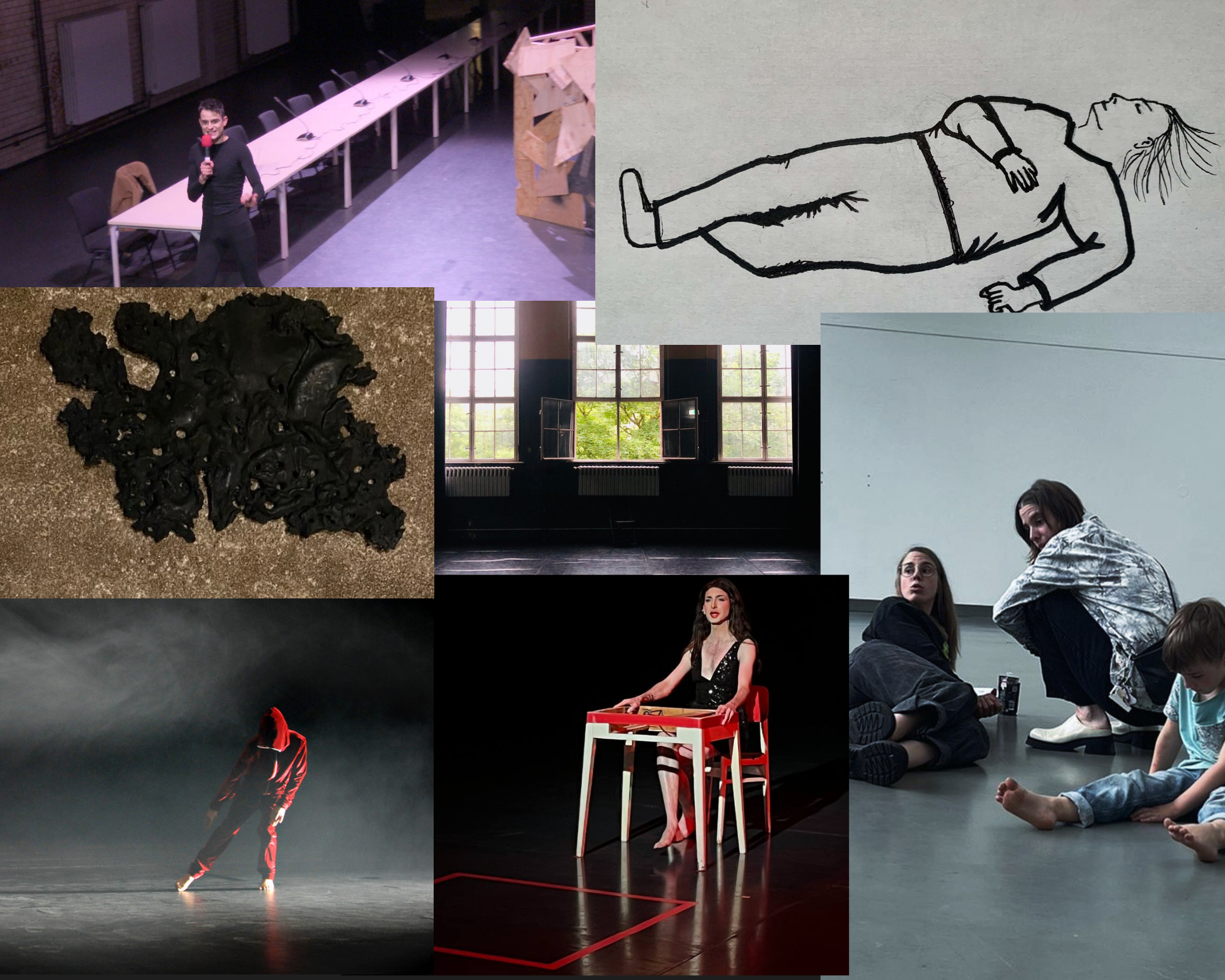
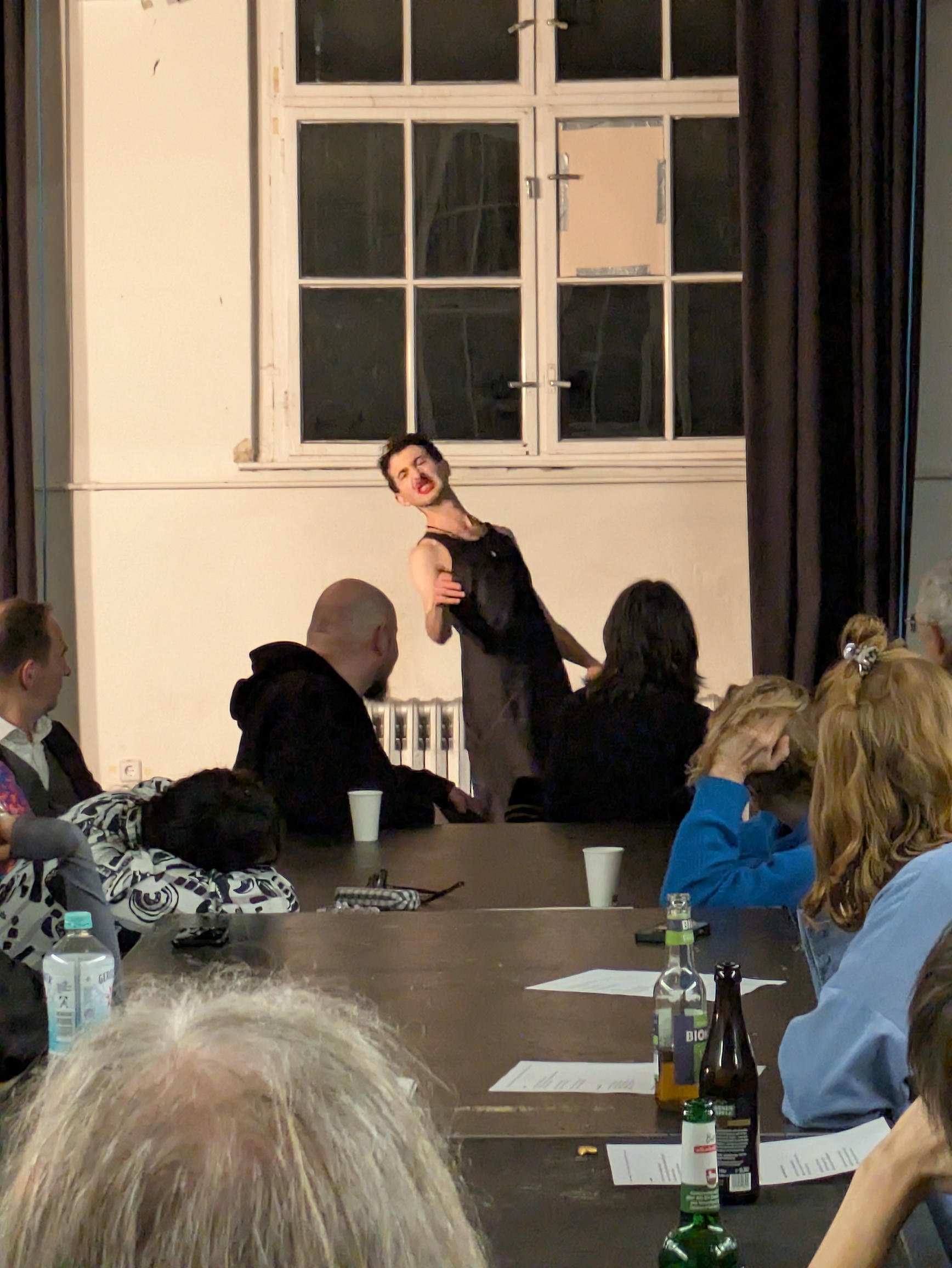
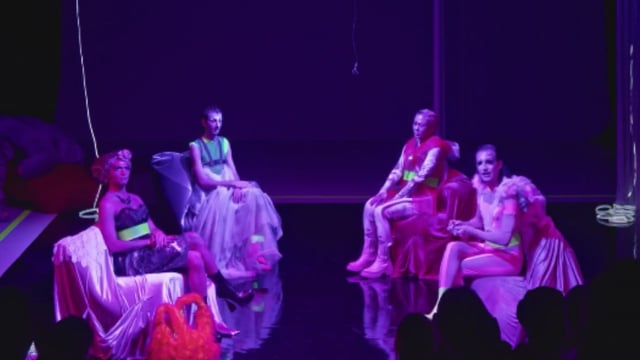
Six artists of different ages and with different backgrounds spent eight weeks researching, writing, dancing, and rehearsing at the AULA in Milchhof. Sabine Zahn, Christina Ciupke, Simone Gisela Weber, Leon Locher, Sefa Okutan, and Rose Beermann will sit down with their audience at a large table this evening to talk about their work processes and engage in conversation with each other. Excerpts from previous works will be shown, approaches to projects that have not yet been implemented will be presented, and ideas will be discussed together. The aim is not to find ‘solutions’, but to cultivate contradictions, ambiguities, and open questions – in the conviction that this is where things get interesting. AULAB is a series of experimental event formats led by Rose Beermann, which focuses on encounters with the audience. The thematic focus is on intergenerational exchange. In the following two editions, she invites two artists of different ages to discuss generational differences, commonalities, and current challenges for artistic work with them and the audience. Die AULA wird im Jahr 2026 gefördert durch die Senatsverwaltung für Kultur und Gesellschaftlichen Zusammenhalt in Berlin.

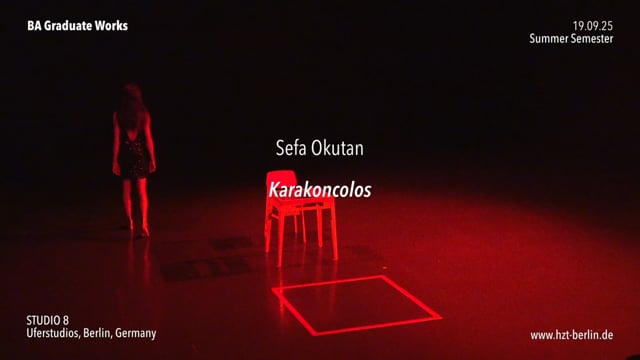
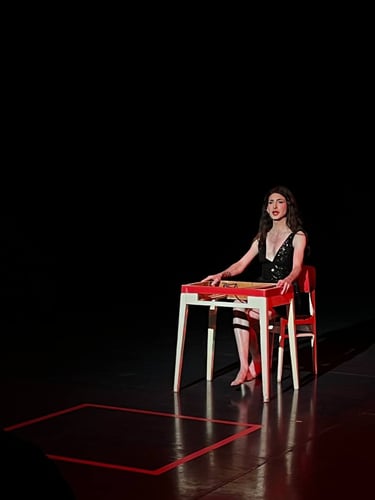
Karakoncolos

Performance and Choreography September 2025 Uferstudios

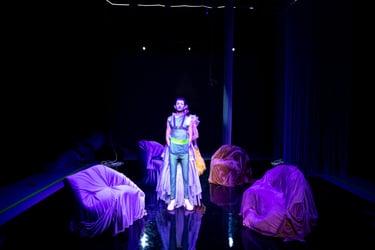
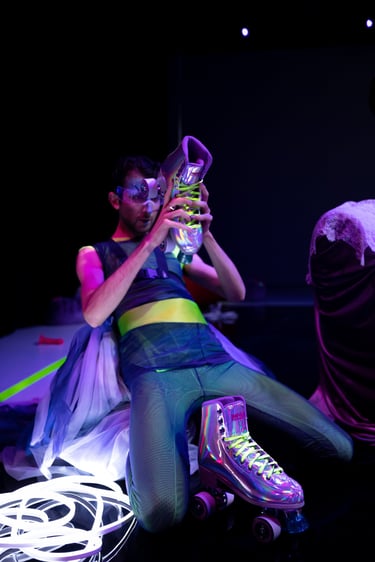
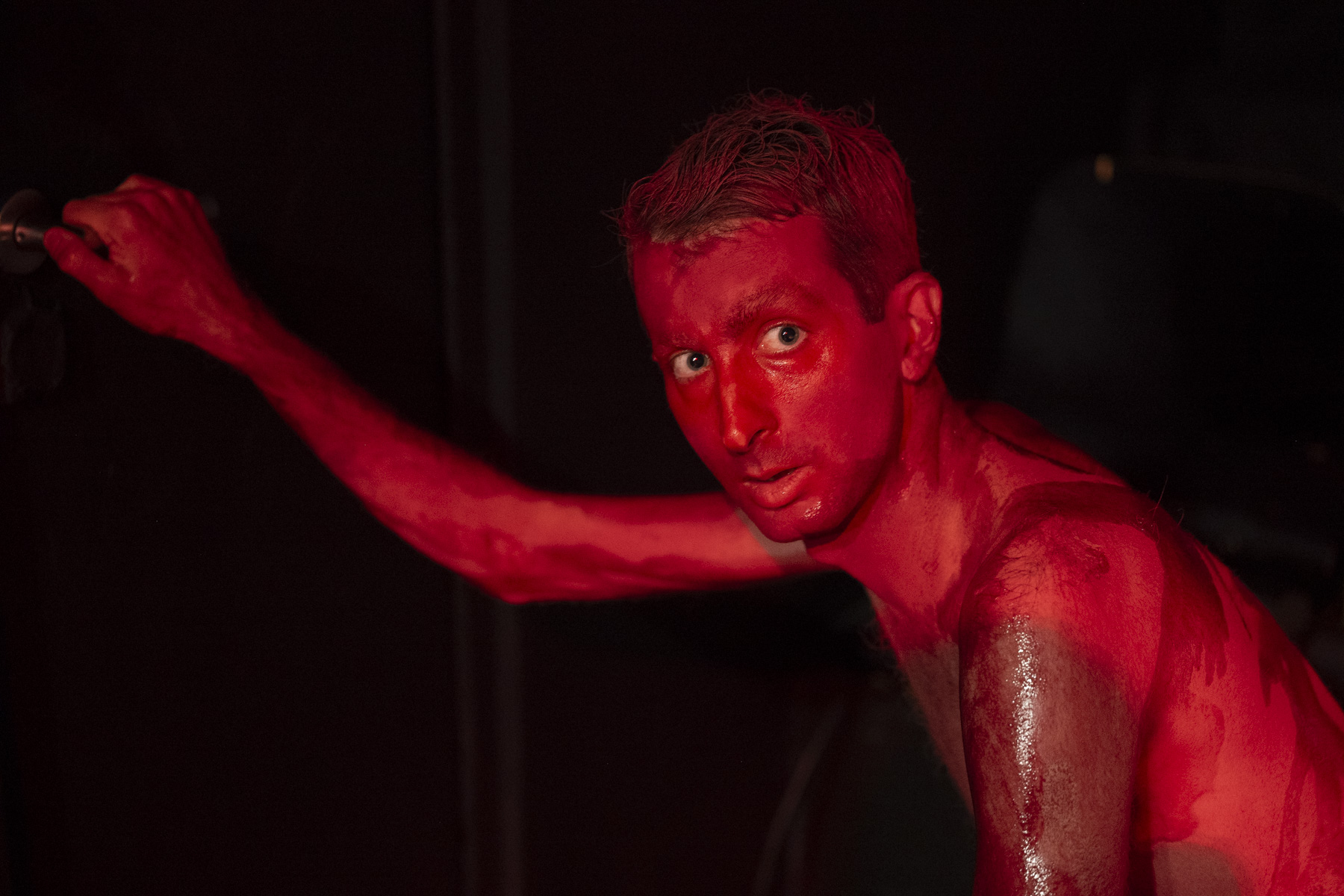
'Karakoncolos' is a solo dance piece exploring rage and joy, subversion and seduction. Inspired by a shapeshifting creature from the Laz culture in northern Turkey, the Karakoncolos emerges in times of great change, challenging us to face harsh realities. Traditionally seen as a demon, I use this figure to invite audiences to experience 'demonization' – a phenomenon increasingly used to justify repression of movements like climate activism and antifascism. Through dance, I highlight how demonization is part of resisting the status quo, while also celebrating joy as a source of strength in marginalized communities, influenced by my connection to Berlin's drag scene. The piece uses somatic, improvisational and choreographic methods to embody the creature and its layers of human / non-human, transforming the fall into the antifall, demonic seduction, rage and joy as resistance & identity pulling.

Bird Dances

Dancer April 2024 Sophiensaele

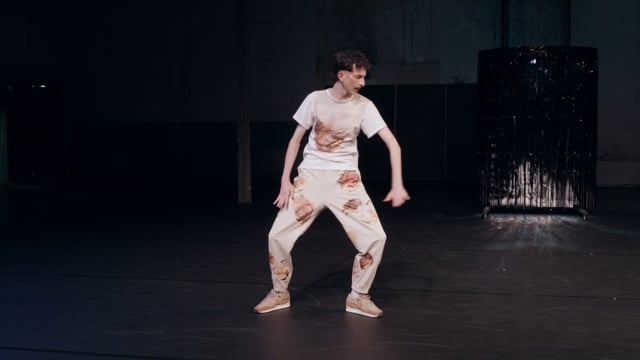
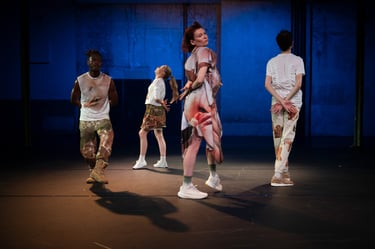
The dance performance Bird Dances features short solos by four dancers whose own biographies intertwine with the stories of four kinds of birds, all of whom spend their lives at least partially in Europe: the marsh warbler, the nightingale, the red kite and so-called "vagrant birds" i.e. bird species that appear in areas far removed from their actual habitat. The inter-related danced monologues are punctuated with movement material drawn from the workshops and costume. The stage design by Dan Lancea maps different spaces, routes and trails within the theater environment.

Planet Lubunya

Dancer & Performer October 2022 Ballhaus Ost

Planet Lubunya is a queer sci-fi theater production featuring diverse performance practices and live music. A critical space journey that playfully skirts the edges of normativity in search of the ultimate utopia, with a touch of humor. The creation process involved a collaborative space where we, as performers, actively shaped and guided the direction of the piece by contributing our unique perspectives. For instance, I brought my background as a dancer and performer with Turkish roots, adding a personal and cultural dimension to the work.

Gasoline Queen

Choreographer October 2022 Ballhaus Ost Berlin

A queer musical about friendship, Y2K nostalgia, the absurdity of heteronormative traditions and everyday competitive culture.

Falling - An urban practice

Performer and Researchere Juli 2022 Berlin: Potsdamer Platz

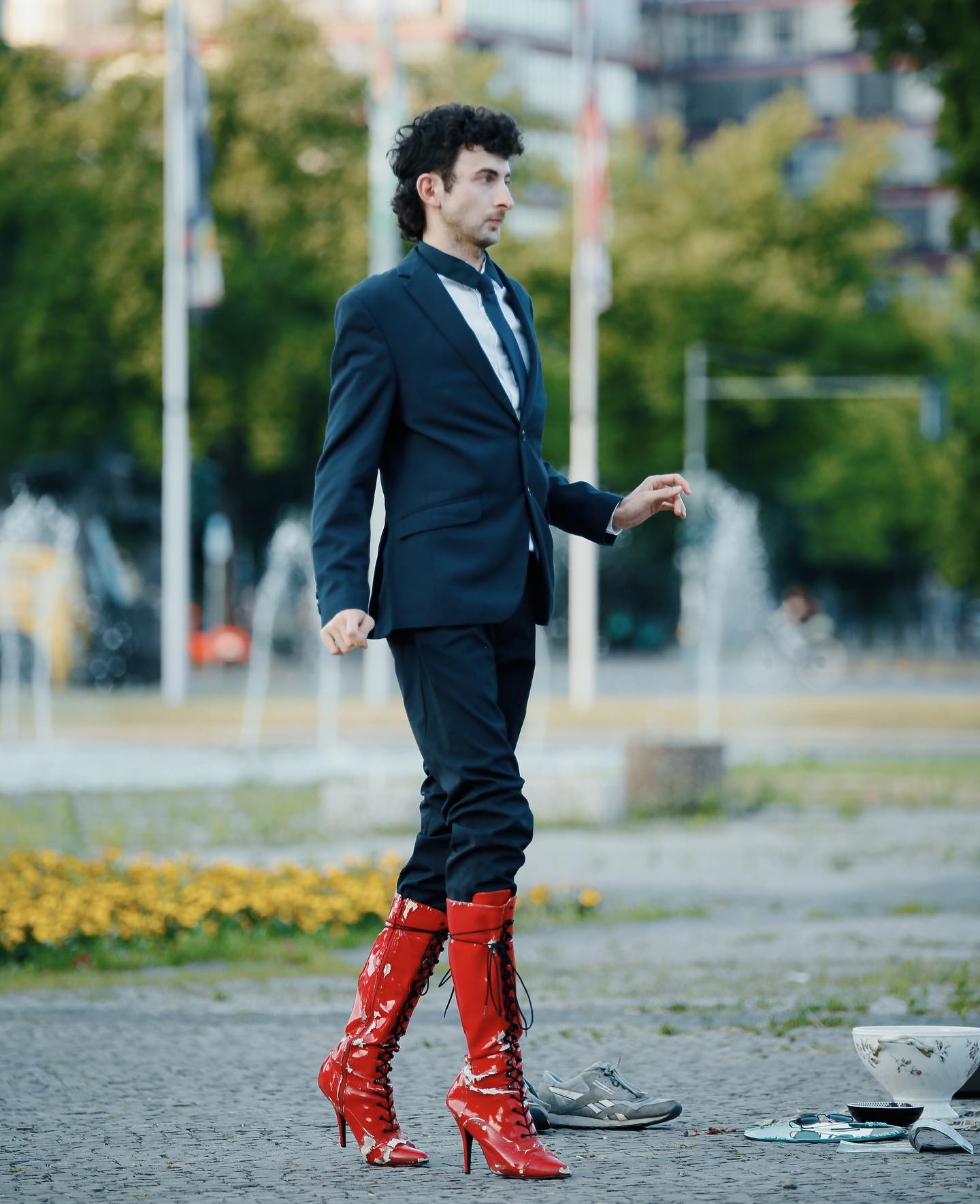
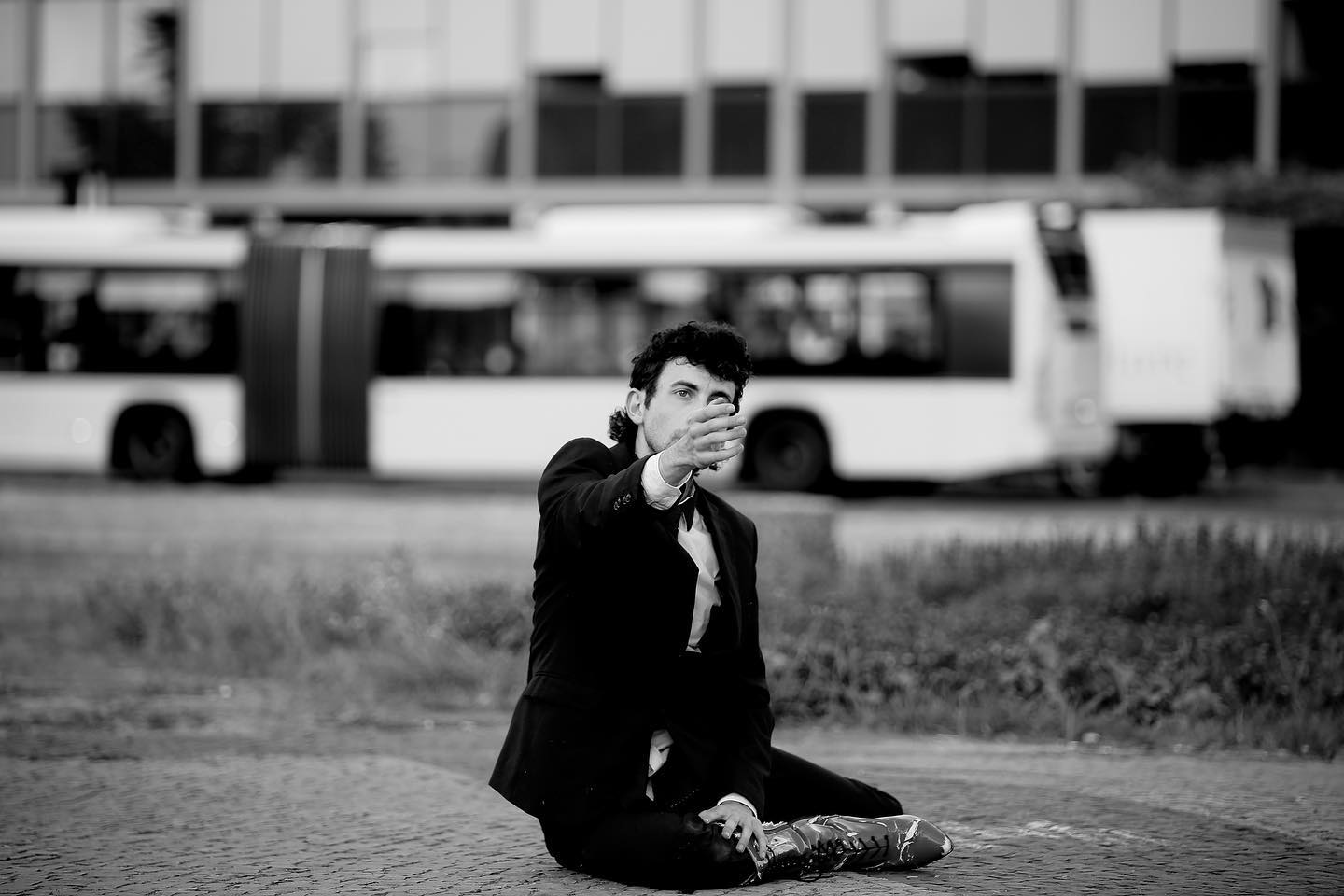
Falling is a project that explores the relationship between the body and the urban environment. It investigates how falling, both as a physical act and a metaphorical concept, can be used to challenge our perceptions of space, movement, and vulnerability in the city. Through a series of performances and interventions in public spaces, the project aims to create new ways of experiencing and interacting with the urban landscape.

3.0

Artistic Statement

The weirding in-between: Among scattered experiences by Sefa Okutan


Through movement-based performance making I want to emphasize the need to keep oscillating, constantly shifting among scattered experiences to then embrace the resulting sense of weirding. This state of weirding can become a starting point of intersection from which connections can emerge.
Inspired by theories, poems and texts such as by Audre Lorde, Sara Ahmed and Sirma Bilge.
Informed by practices such as somatic research, somatic practice, contemporary dance, and performing arts.
Guided by themes like folklore & creatures, queer culture and intersectional solidarity.
Facilitated through somatic-based research of embodied protest and resistance, joy and rage, and the weirding.
Translated into movement-based performance on stage or urban spaces that can be accompanied by spoken text and soundscapes.
4.0

Bio

Sefa Okutan is a Berlin-based dance and performance maker working at the intersection of embodied protest and queer myth. Having completed a BA in Dance, Context, and Choreography at HZT Berlin, Sefa’s work is rooted in a politicized exploration of joy and rage as transformative forces. Their choreographic and performative language draws from folklore, drag and community experience. Sefa's recent works and contributions are Gasoline Queen at Ballhaus Ost and Planet Lubunya at Ballhaus Ost. They’ve performed for Kareth Schaefer in Bird Dances at Sophiensaele and collaborated with collectives like Saye Kolektif in Istanbul Sefa is also active in community organizing, offering workshops on homonationalism and queer solidarity and working with migrant and refugee communities through mentoring through the intersectional queer activist collective Critical Queer Solidarity. Through dance and performance-making, Sefa creates spaces where shifting among scattered experiences can take form even while oscillating and where embracing the weird becomes common ground for connection.

5.0

Research

Pretending & Subversion

A Practice-Based Investigation

Practice-Based Research 2023 - 2025 Berlin, Germany
SubversionFallingAnti-FallingAnticlimaxQueer PerformanceUrban Intervention

The central inquiry asks: How can pretending function as a methodology for physical and conceptual subversion and what knowledge emerges through this practice?

This text explores three distinct components of my practice where pretending and subverting are central: Falling, Anti-Falling and Anticlimax. Each displays a distinct perspective on how one pretends and in doing so subverts.

Methodology & Context

This research positions the body as a way of digesting scattered experiences and as a tool for knowledge production. Knowledge emerges through unannounced urban interventions that interrupt daily routines, studio experimentation dealing with gravity and the choreographic translation of political concerns into structured performance.
The work draws on Butler's notion of performativity and Muñoz's concept of disidentification while building on artists who have used falling and failure as choreographic tools, such as Eiko Otake, Amal Kenawy and Tehching Hsieh. This investigation is fundamentally embodied; understanding gravity's subversion or the physicality of anti-falling cannot be fully articulated through text but must be experienced and witnessed through the performing body.

Falling

Reactivity, Interference and Collapse
A fall is extraordinary and unusual. It is a sudden release into gravity, contrasting with our usual resistance and muscular contraction to remain upright. My exhaustion with this constant fight against gravity led me to develop an urge to finally love and embrace it, despite the cost of disruption.
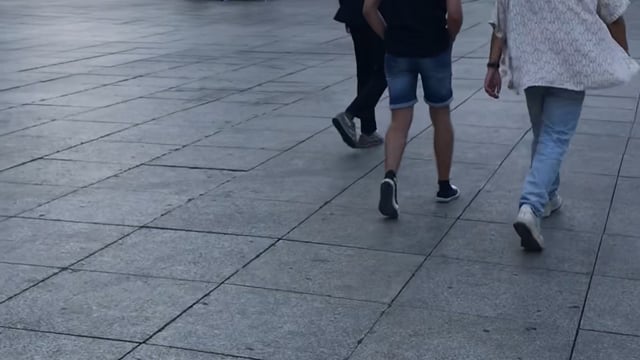
In my urban practice across Berlin's public spaces (2024-2025), I used this act of falling to disrupt daily rhythms. These interventions took place in high-traffic areas like U-Bahn stations, busy sidewalks and shopping districts. Each fall lasted until a passerby intervened. Video documentation captured not only the falls themselves but the spectrum of reactions they provoked.
Seeing someone give in to gravity interferes with the spectator's movement through space and urges them to interfere by exercising civil courage to help me up. The gap between falling and being helped ranged from seconds to several minutes, revealing different thresholds of collective responsibility in urban space.
Subverting Vulnerability
While falling is often seen as vulnerable — a loss of control or failure of the body's normative functioning - surrendering to these forces allows us to gain power. We can use the momentum of the fall to rebound, redirecting kinetic energy into dynamic movement.
By reimagining the fall as something powerful, we subvert its connotation. Falling becomes a practice of refusal: refusing the obligation to remain upright, productive and in control. Touching on Ali Chahrour's framing of grief as resistance in 'Night', this work positions the collapsing body as an agent of political refusal rather than passive defeat. What emerges is a choreographic vocabulary born from surrender rather than mastery.

Anti-Falling

Too much pretending transforms the pretending
Anti-Falling builds on the idea of pretending as a form of reskinning something familiar. My research involved reimagining gravity. I pretend so much it turns it upside down. The act itself rejects the power of gravity.
The current political climate in Germany greatly influenced this research. Increasing state repression, particularly regarding assembly rights - such as prohibitions on the speaking a certain language (in this case Arabic), violent police attacks on protesters and the prosecution of legal protests — made me realize how these forces pull one in all directions.
This overwhelming force led me to embody the notion in a physical act. After learning to feel uplifted by the fall, I went on to subvert the physicality of the fall itself, transforming it into the anti-fall.
The Choreography of Anti-Falling
The anti-fall is defined by a refusal of downward direction. The body moves in multiple directions at once, dispersing gravitational pull. Arms, legs and torso pull in opposing vectors, creating tension without resolution and maintaining a state of suspension rather than collapse. This physicalizes the experience of being torn by conflicting forces like conscience, state power and community calling.
This movement vocabulary produces knowledge about resisting not through opposition but through dispersion, refusing to compile into a single target. It emphasizes the need for decentralized bodies. Resonating with Ahmed's inquiry into how bodies are oriented in space, refusing the gravitational line allows us to inhabit space differently.

Anticlimax

Expectation & Refusal
In Anticlimax, pretending plays with the idea of expectation. The performer pretends to build towards a climax, teasing the audience with the promise of resolution. The anticlimax subverts this need and opens up new possibilities for collaborative engagement with the performed act.
Origins in Community & Choreography
This concept stems from my choreographic work in Sumpf by Itchi Fleischer (Swamp), developed in Berlin (2024) with five queer and gender-nonconforming performers. We translated experiences of queer dating, particularly regarding gender nonconformity, into physical movement.
The process involved conversations with members of Berlin's queer community about their dating experiences. From these interviews, each performer developed gestural phrases that we collectively shaped into a structure through improvisational scores. The term "anticlimax" emerged from these community voices, as dating often led to "situationships"—relationships that promise connection but refuse to develop.
The Performed Anticlimax
I investigated whether the spectator needs to experience a climax first to experience a failed climax. I found that suggesting or heavily implying a climax, but then refusing to perform it, creates the anticlimactic moment.
We achieved this by building intensity through repeated, escalating gestures and then stopping or dispersing right when resolution was expected. This durational withholding extends the pre-climactic state until expectation itself transforms. The absence of a climax invites the audience to fill the gaps and imagine, pretending along with the performer to construct their own interpretations.
Knowledge Through Disappointment
This practice reveals that anticlimax is not merely the absence of climax but a site of meaning-making. The queer experiences that inspired this work are not failures to be overcome but spaces to generate. By refusing conventional narrative resolution, anticlimax opens space for alternative forms of connection, intimacy and collective witnessing. Exactly this is what naturally occurs in queer spaces.

Embodied Knowledge & Future Inquiries

Across these components, pretending functions as a methodology that disrupts normative relationships to the body. Falling challenges uprightness, anti-falling challenges gravity and anticlimax challenges dramaturgical expectations. Each practice translates political experience — state repression or queer precarity — into embodied form, producing insights about how bodies might move through restriction.
Unexpectedly, the temporal dimension of waiting became as significant as the movement itself; duration produces meaning. Responses to falling (conducting civil courage, ignoring the fallen person) revealed assumptions about productivity and care that construct our urban spaces, while the anticlimax revealed itself as an abundance rather than a lack.
This research creates agency, implicating witnesses in the meaning-making process, but it also leaves questions open. My position as a white-perceived individual creates a specific public response to my falling body that requires deeper investigation. Questions remain about how anti-falling functions as a collective practice and how these concepts translate beyond the Western European context. These inquiries have already led me toward exploring subversion in Balkan folkloric creatures like the 'Karakoncolos' from Northeast Turkey.

Conclusion

Pretending and subversion are ways of knowing through the body that challenge, disrupt and reimagine what movement can mean and do. This research demonstrates that pretending is a serious methodology for artistic investigation, generating knowledge unavailable through other means.
By falling, anti-falling and refusing climax, I propose that subversion is not about direct opposition but lateral moves: refusing to play by gravity's rules, dispersing rather than concentrating force and withholding resolution to create space for collective (re)imagination.

References & Influences

Theoretical
  • Butler, Judith. "Performative Acts and Gender Constitution." Theatre Journal, 1988.
  • Halberstam, Jack. The Queer Art of Failure. Duke University Press, 2011.
  • Muñoz, José Esteban. Disidentifications: Queers of Color and the Performance of Politics. University of Minnesota Press, 1999.
  • Ahmed, Sara. Queer Phenomenology. Duke University Press, 2006.
Artistic Practice
  • Otake, Eiko. A Body in Places: Public interventions exploring vulnerability and gravity
  • Kenawy, Amal. Silence of the Sheep: Subversive public performance and crawling resisting state power
  • Hsieh, Tehching. One Year Performances: Durational work focusing on waiting and the refusal of climax
  • Chahrour, Ali. Night: Choreographing the collapsing body and grief as resistance
Community Voices
  • Interview excerpts from Berlin's queer community (2024)
  • Observations from urban falling interventions (2024-2025)
6.0

Education

B.A. Performing Arts

February 2023 - July 2023 Bilgi University Istanbuls

The Performing Arts program entailed curriculums like Movement & Choreography, Experimental Theater, Bodies & Technologies.

B.A. Dance/Choreography/Context

Oct 2021 - September 2025 HZT Berlin

The goal of the program is to develop artistic work in the field of choreographic theory and practice. A strong focus of the course is placed on the students' own artistic goals in student project work; this emphasis challenges students to find an experimental approach to dance and choreography. The documentation and discussion of students' artistic projects in groups is an integral element of the curriculum: preparing, analyzing and documenting material together in a group is a method also used in the professional field. It also helps students to develop the necessary competencies to articulate and evaluate the artistic processes and outcomes of themselves and others.

7.0

Experience

Somatic practice

Alexander TechniqueBody Mind CenteringFeldenkrais

Contemporary, Classical Dance

ImprovisationLimónLabanGraham FoundationsBallet Foundations

Performing Arts

Voice TrainingMask and MimeStorytelling
8.0

Contact

Responding within 24 hours

Instagram